Booking choice: The guided Kjerag day. Check dates Tour details
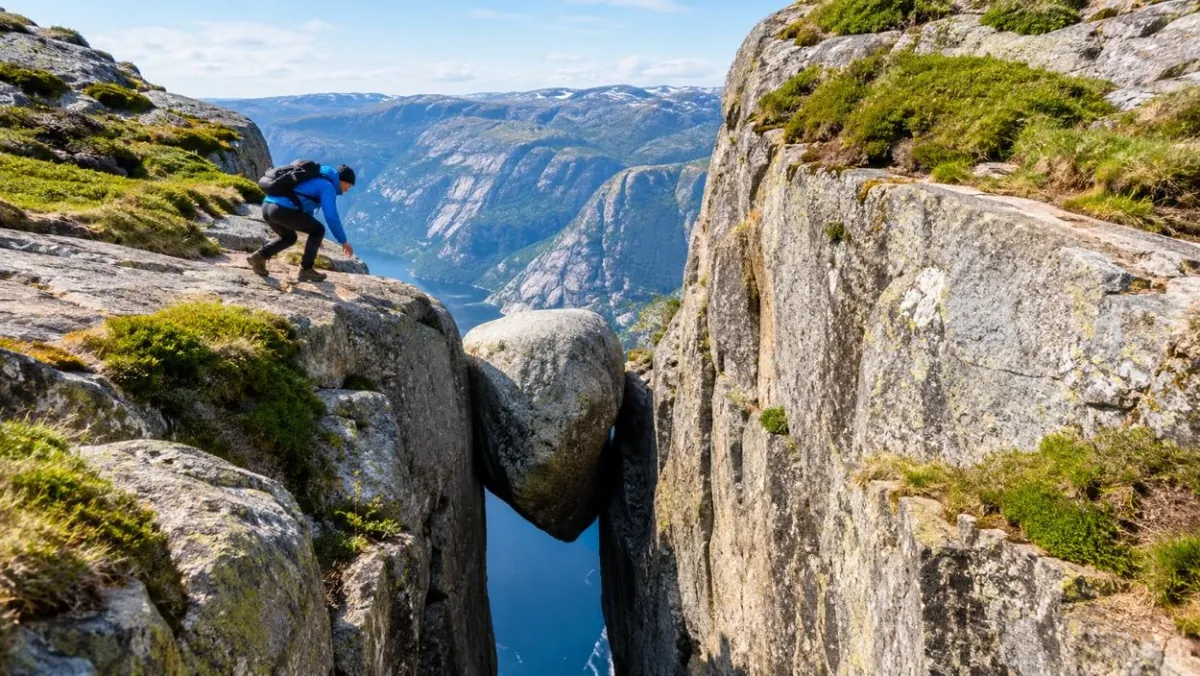
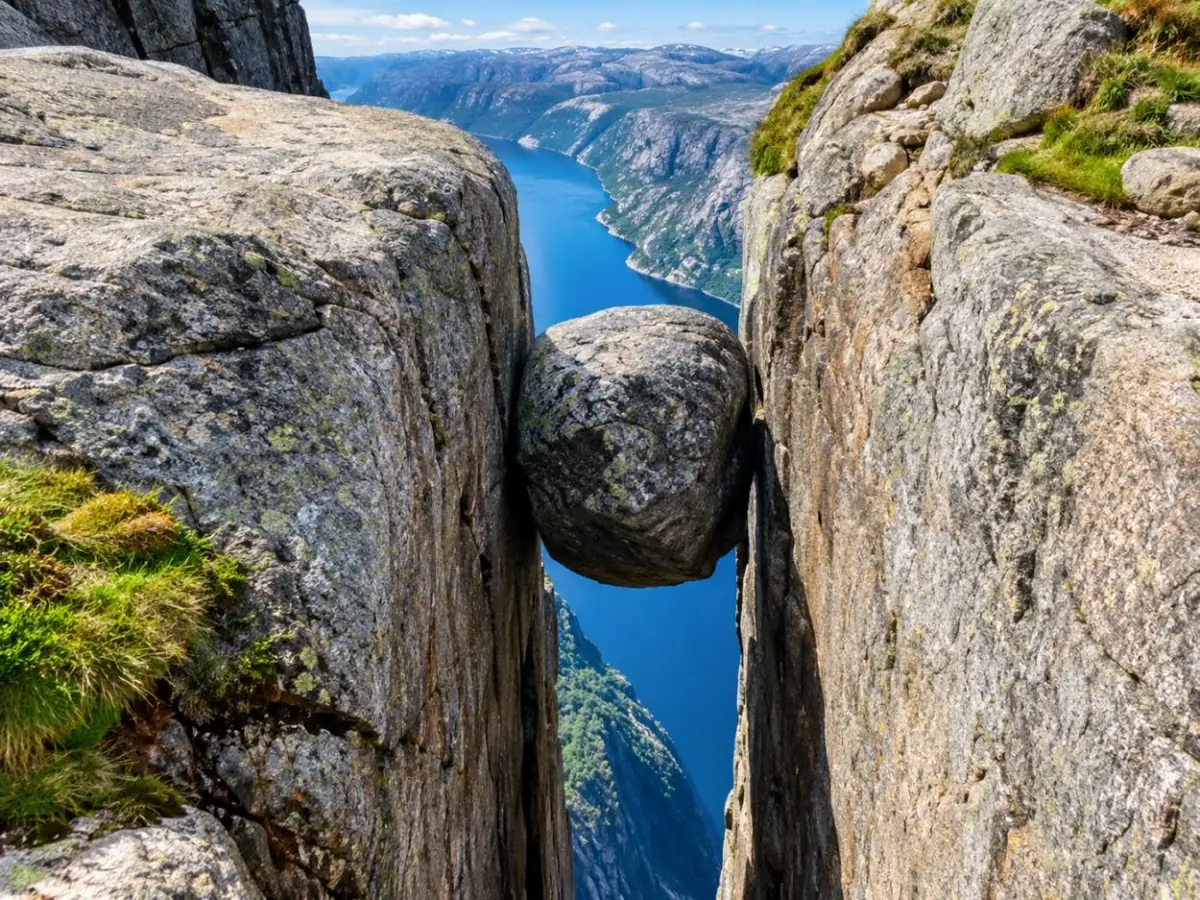
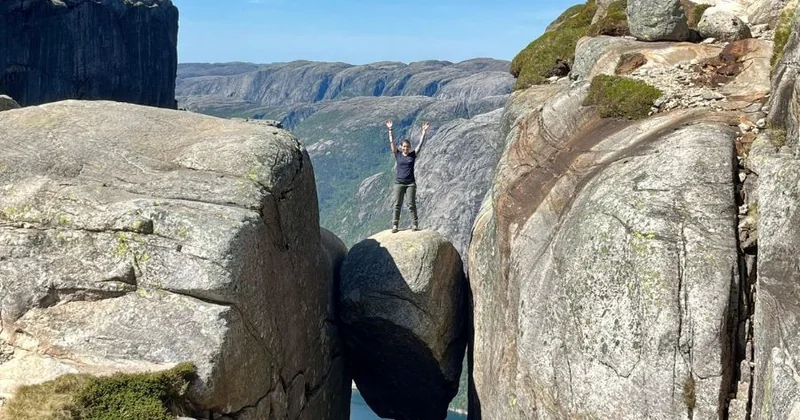
Kjeragbolten is a boulder of roughly five cubic metres, jammed in a crevice on the Kjerag massif with 984 metres of air under it. Thousands of people stand on it every summer, and the photo makes it look like a stunt. It isn't climbing. You walk out along a ledge, take one awkward step, and you're on.
What follows uses the official advice from Fjord Norway and Visit Norway, the accident figures on Wikipedia's Kjerag page and news reports. We don't add numbers that we can't source, and we won't tell you to step on. That part is your call.
The quick answer
The boulder does not move, and no death from a fall off the boulder is on record, as far as published sources show. The real risk is the ledge out to it: about 30 cm wide, no railing, a 984 m drop. Skip the step in wind, rain or wet rock, or if your legs start shaking. The deaths at Kjerag are BASE jumpers: NRK counted 11 fatal BASE accidents up to 2016.
Is it safe to stand on Kjeragbolten?
The boulder itself is stable. The risk is the ledge you cross to reach it and the single step from the ledge onto the rock.
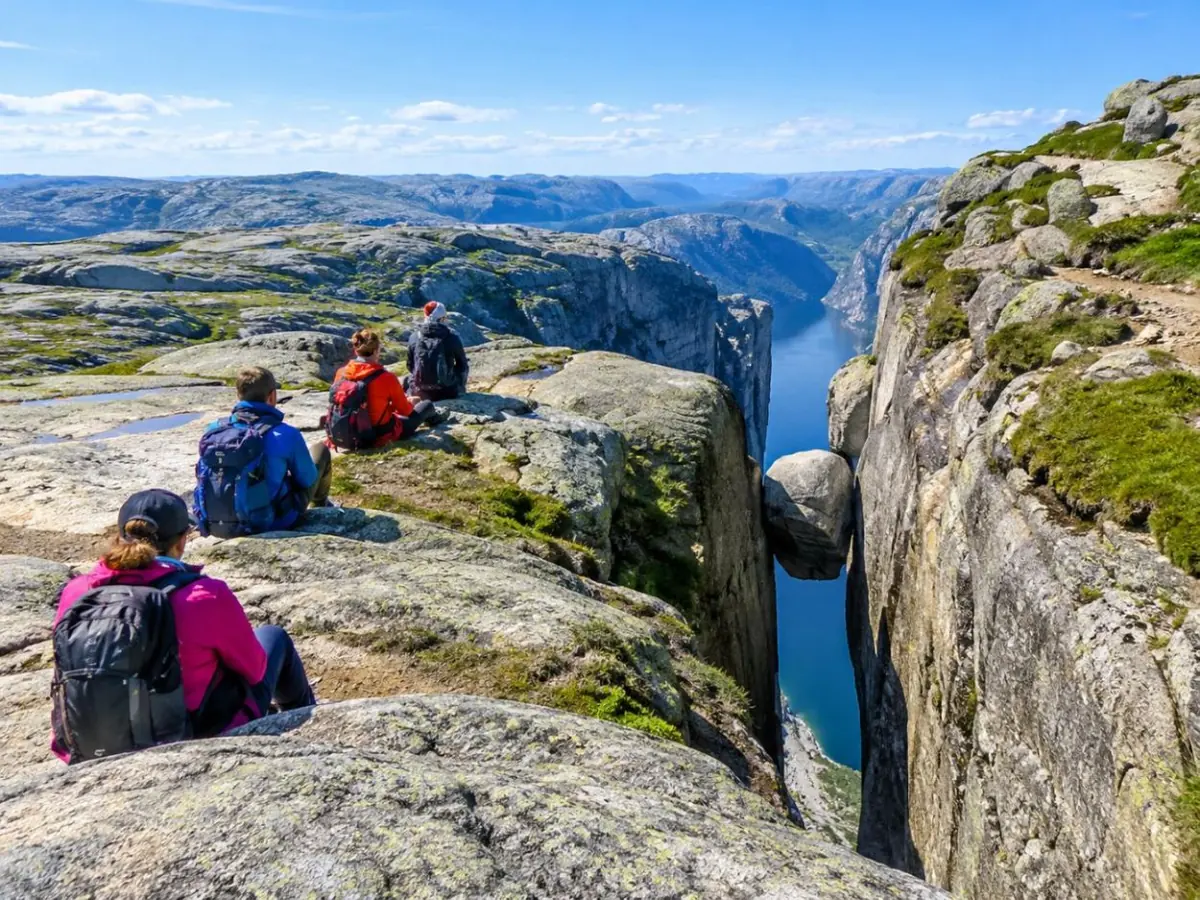
Kjeragbolten is about two metres across and locked between two cliff walls. It has sat there since the ice retreated at the end of the last glaciation, and it does not rock or shift when people climb on. What Fjord Tours describes is the approach: a ledge about 30 cm wide that narrows close to the boulder, with metal loops fixed in the rock to steady your hands. There is no railing, no rope and no net.
Most people cross the ledge sideways, facing the wall, then step up onto the boulder and turn around for the photo. The step is short. It feels long. Coming back is often worse, because you're stepping down toward a gap you can now see.
Fjord Tours calls stepping onto the boulder something "best left to experienced adventure-seekers". That's fair. Plenty of fit hikers walk to the crevice, look, and decide the plateau view is enough.
Has anyone ever fallen from Kjeragbolten?
No death from a fall off the boulder is on record, as far as published sources show. Even that claim is thinly sourced, so treat it as good luck plus care, not proof of safety.
Wikipedia's Kjeragbolten article states there have been no recorded deaths from falling off the boulder, and the line carries a citation needed tag. We have found no news report of a hiker falling from the boulder itself. People have been hurt and rescued on the trail, and Visit Norway says plainly that "rescue operations are triggered by hikers every year".
Two things keep the boulder's record clean. The step is short, and people concentrate hard on it. The trail behind you, with wet slabs and chains, gets far less respect.
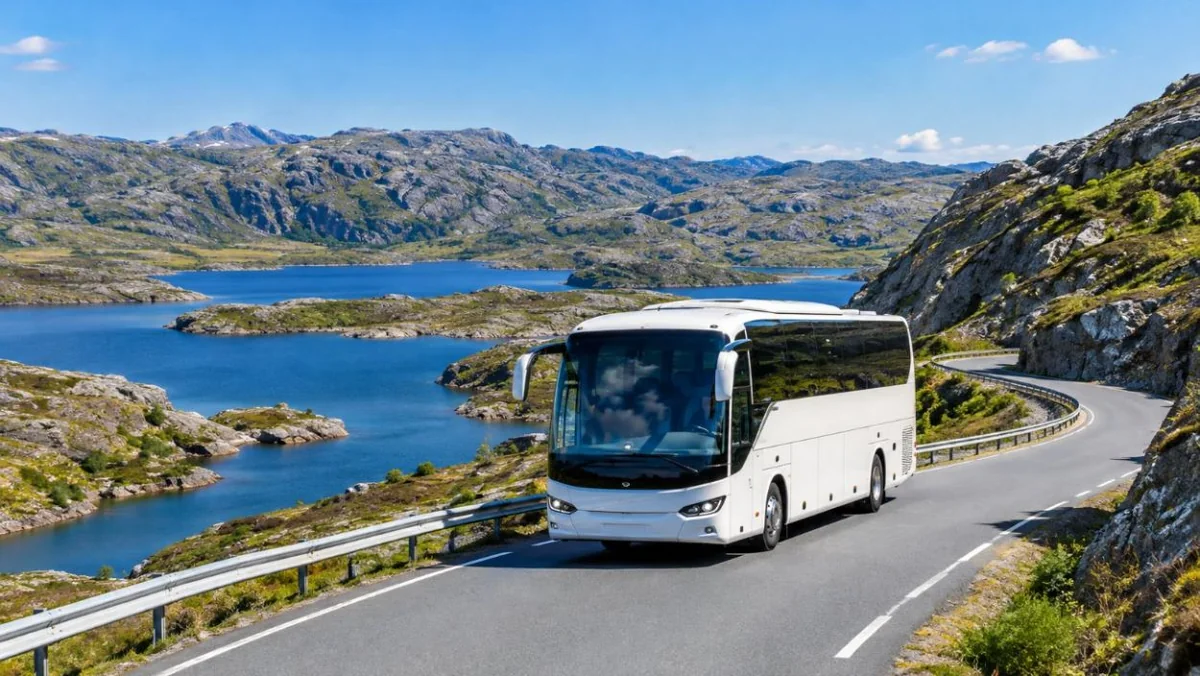
A guide who has crossed the ledge hundreds of times, a group of at most eight and the van from Stavanger.
Check dates for the guided Kjerag dayHow many people have died at Kjerag?
The published deaths at Kjerag are BASE jumpers: NRK counted 11 fatal BASE accidents between the first registered jump in 1994 and 2016.
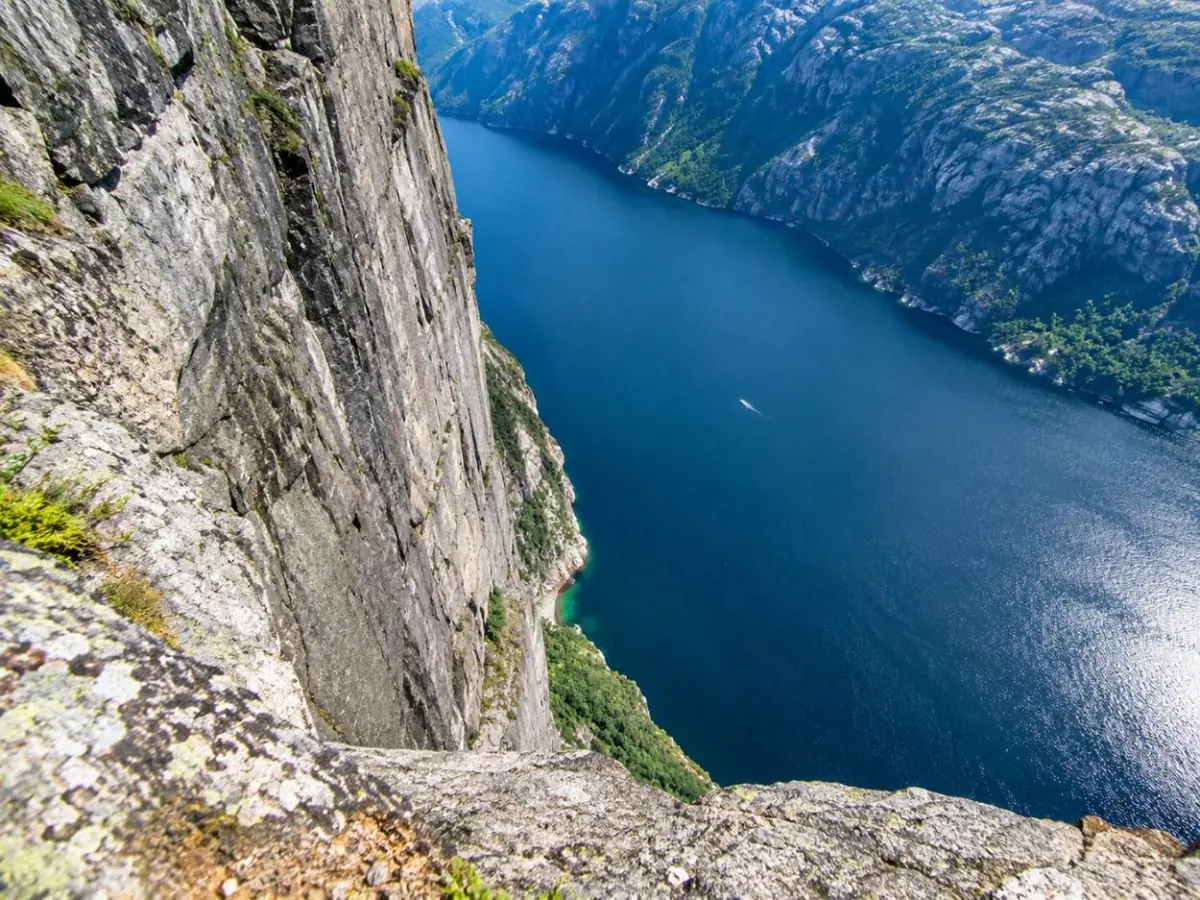
Kjerag is one of the best-known BASE jumping cliffs in the world. The northern wall falls 984 metres almost straight into the Lysefjord, and jumpers leave from the plateau close to the hiking route. The figures below come from Wikipedia's Kjerag page, which cites the Norwegian broadcaster NRK for the fatal count.
| BASE jumping at Kjerag, 1994 to 2016 | Figure |
|---|---|
| First officially registered jump | 1994, by Stein Edvartsen |
| Registered jumps | 48,668 |
| Registered accidents | 131 |
| Accidents needing a rescue helicopter | 44 |
| Fatal accidents involving BASE jumpers (NRK) | 11 |
That is a different activity from the hike. Jumpers stand on the same plateau you walk across, so you may see one gear up and leave. If you do, give them room and don't follow anyone to the edge for a better view.
How many people have died on Pulpit Rock?
News reports describe two fatal falls from Preikestolen: a Spanish tourist in 2013 and a man in his 40s in June 2024. No official running total is published.
In October 2013 The Local reported that a Spanish man fell while going back for a last photo, and called him "the first tourist to ever fall from the rock". In June 2024 a man in his 40s, hiking alone, slipped and fell, according to police quoted in news reports. Some articles also list a 2015 death of an Australian student under Preikestolen; she fell at Trolltunga, not Pulpit Rock, as Australian reports at the time make clear.
Set that against the traffic. Visit Norway puts Preikestolen at more than 300,000 hikers a year, on a cliff 604 metres above the fjord with no fence. Both rocks have a short list of deaths for the numbers involved, and both lists come from moments of inattention near an edge. Our Kjerag vs Preikestolen guide compares the two hikes in full.
What makes the Kjerag hike itself risky?
Wet granite, chains on steep slabs, sudden wind or fog on an open plateau, and running out of daylight. Most trouble happens on the trail, not on the boulder.
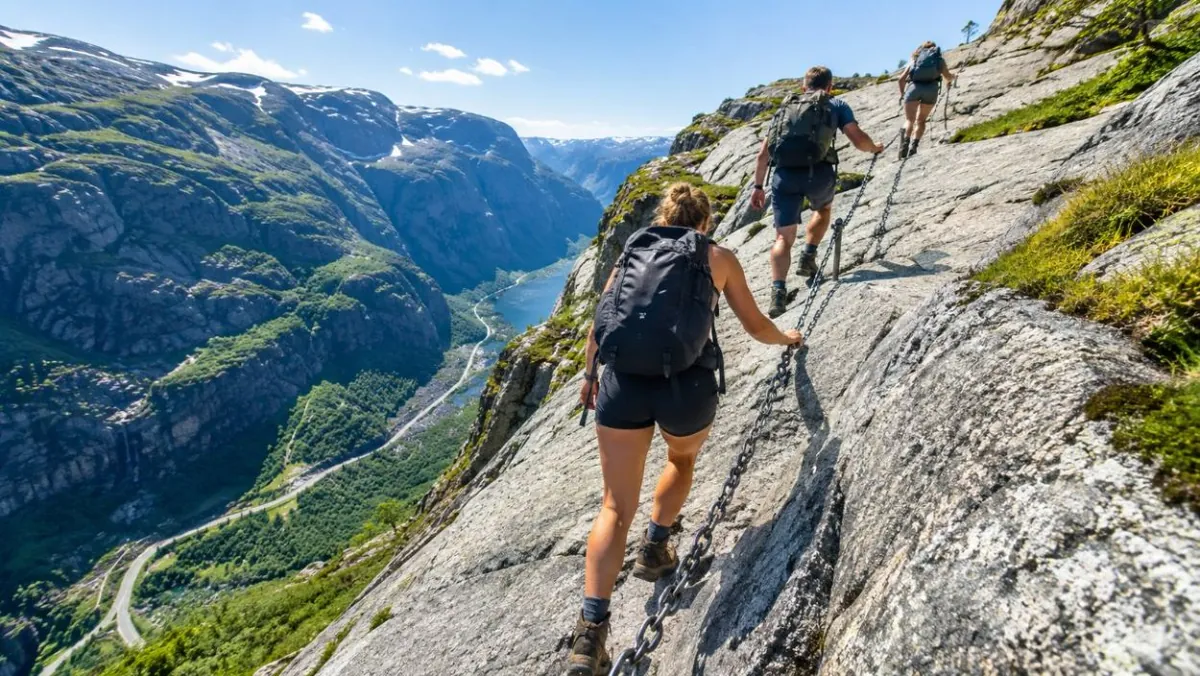
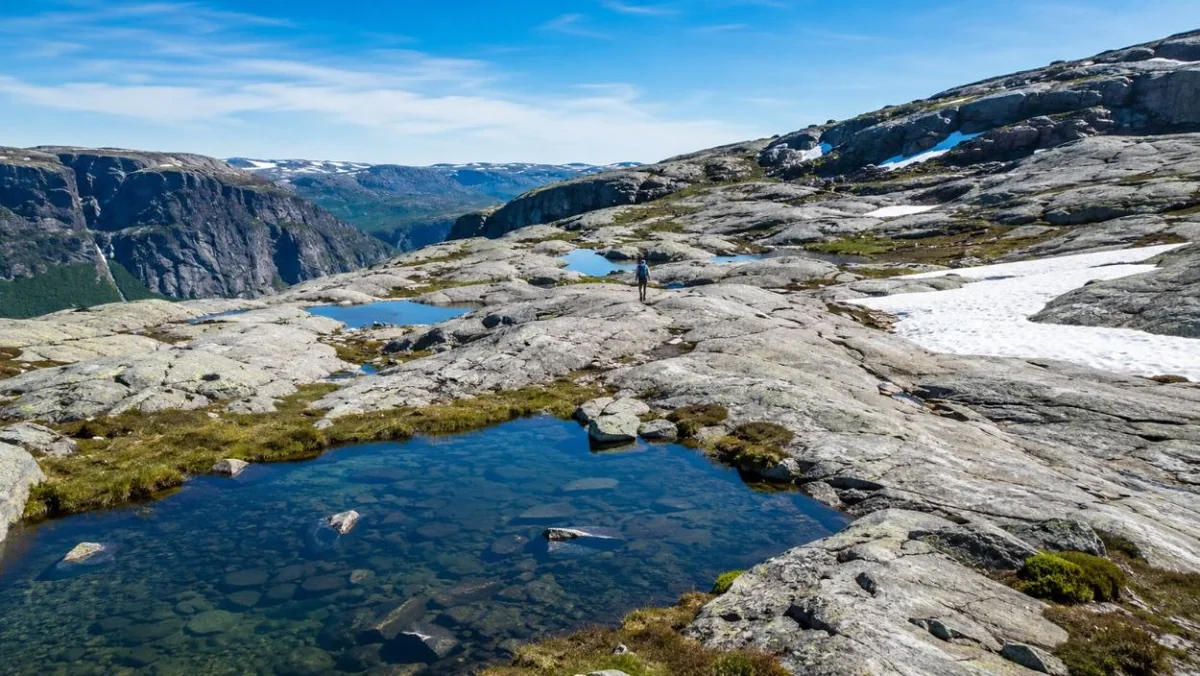
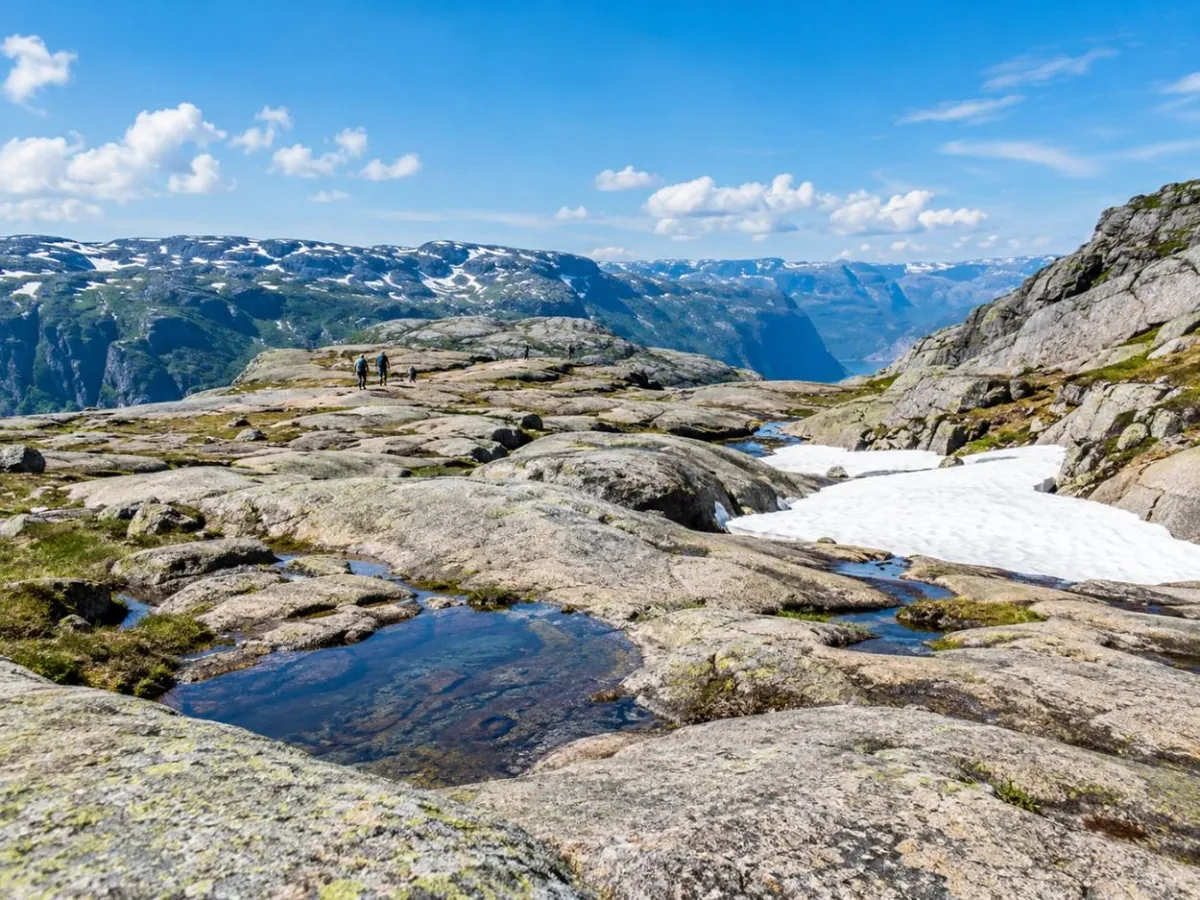
The route is about 11 km there and back with three steep climbs over bare rock, and Fjord Norway notes several hundred metres of chains on the steepest sections. Going down those chains is where people slip and where the nervous ones freeze. The plateau at the top is a maze of granite humps and pools; in fog the red T markers can vanish twenty metres ahead.
- Slick rock: granite that is dry and grippy turns greasy after rain, and the slabs stay wet for hours.
- Wind: Visit Norway warns of "occasional strong gusts" at Kjerag. A gust on the ledge is the one scenario that should keep you off it.
- Daylight: Fjord Norway's rule is simple: don't start if you might not be back before dark.
- Fatigue: the third climb on the way back comes when legs are done. Pace the morning to have something left.
DNT Stavanger keeps a small emergency shelter on the path between Øygardstøl and Kjerag, with no beds. It is for getting out of weather, not a place to plan a stop.
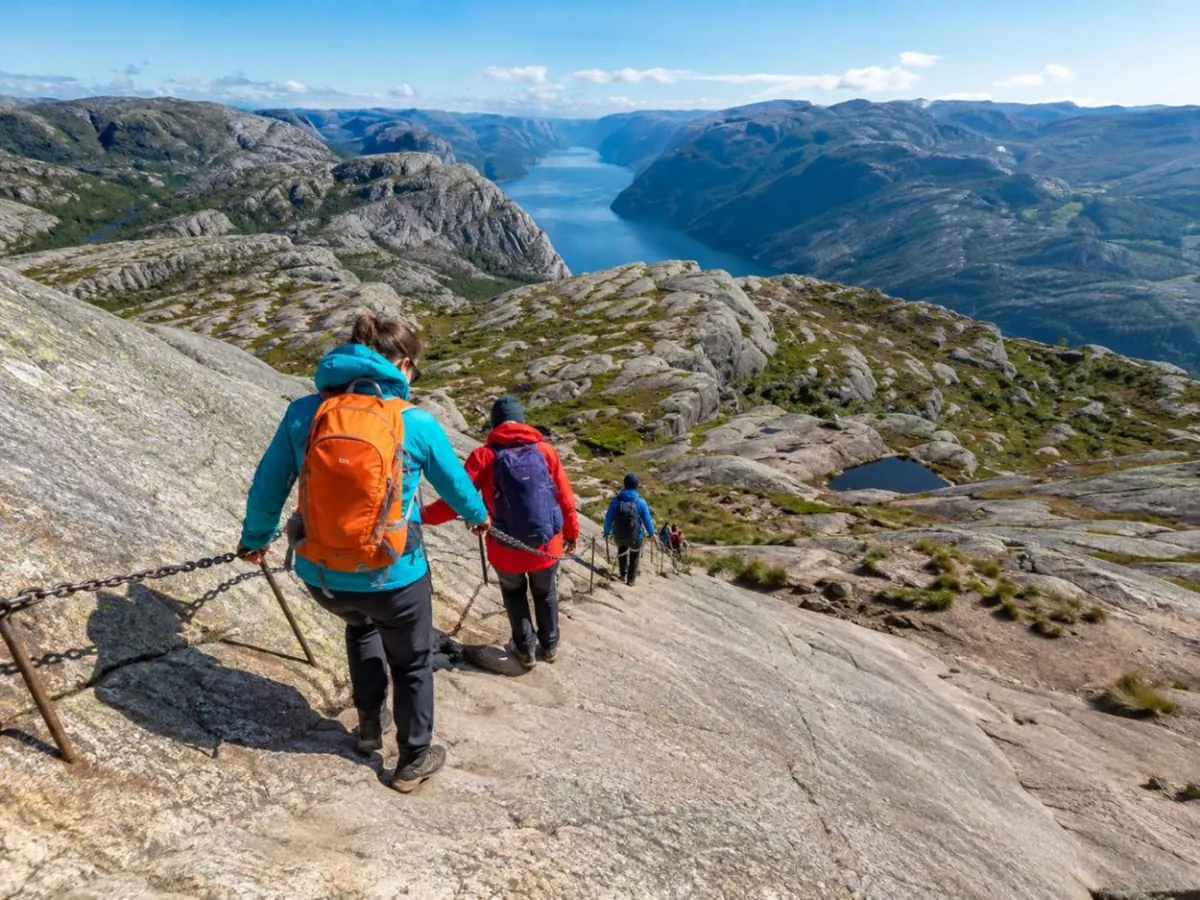
A guide sets the pace on the chains, reads the weather on the plateau and shows the line along the ledge, with no driving or parking to sort out.
Explore the guided Kjerag day Tour detailsIs Kjeragbolten safe in wind or rain?
No. In strong gusts or on wet rock, leave the boulder alone. Visit Norway goes further: don't start the hike if strong wind, heavy rain or fog is forecast.
The ledge is a slab of granite above a long drop. Wet, it offers less grip than it looks. In wind, you can't predict the gust that catches you mid-step. Guides make this call several times a season and the sensible ones don't negotiate.
| Conditions | The hike | The boulder |
|---|---|---|
| Dry, light wind | Go, start early | Your choice |
| Showers earlier, rock drying | Go, with care on the chains | Only if the ledge is visibly dry |
| Steady rain | Think twice; the slabs get slick | Skip it |
| Strong wind or gusts | Don't start (Visit Norway) | Skip it |
| Fog on the plateau | Don't start (Visit Norway) | Skip it; you may not find it anyway |
| Snow or ice on the route | Only with a guide | Skip it |
Check the forecast for Kjerag on yr.no, the Norwegian Meteorological Institute's service, the evening before and again in the morning. Then ask the staff in the service building at Øygardstøl, staffed from May to October, before you set off.
How do you decide on the day whether to step on?
Decide at the crevice, not at home. Watch a few people cross, check the rock is dry and the wind calm, and notice what your legs are doing. If they shake, stay off.
A few rules that work:
- Make the decision before you queue. Standing in line builds pressure to go when your turn comes.
- Watch the return, not the step out. Getting back off the boulder is the part people misjudge.
- Leave the pose for later. Get on, crouch or sit, get the photo, get off. Jumps, handstands and edge selfies are how accidents happen on cliffs like this.
- One person at a time on the ledge and on the boulder.
- Turn around without guilt. The view from the plateau and the photo from the rocks beside the crevice are the reason to come anyway.
Queues of 30 minutes to an hour are normal on sunny summer weekends. Starting before 9 is the simplest way to cut that, and the best time to hike Kjerag guide covers the quieter days.
Want someone beside you on the ledge? The private hike goes at your pace, with crampons when needed.
Check dates for the private Kjerag hikeWho should skip the boulder, or the hike?
Anyone with vertigo or a strong fear of heights, children too small to make the step, and anyone not fit enough for six hours of steep granite.
The operators draw the same lines. The guided Kjerag day lists the hike as unsuitable for pregnant women, people with a fear of heights or vertigo, and anyone with low fitness. The private Kjeragbolten hike starts at age 10 and excludes people with mobility or breathing problems. One older guest on the private hike wrote that the guide held their hand on the difficult sections, which says a lot about what a one-to-one guide can do.
If heights make you freeze, don't fight it here. Preikestolen gives you a 604-metre cliff on the same fjord with a wide, flat top and a much easier path. For everything about the trail itself, read how hard the Kjerag hike is.
Frequently asked questions
Does Kjeragbolten move?
No. The boulder is wedged tight between two cliff walls and has stayed put since the last ice age. The risk is the narrow ledge you cross to reach it, not the rock itself.
Is there a railing or rope at Kjeragbolten?
No. There are a few metal loops fixed in the rock along the ledge for your hands, and nothing else. No railing, no rope, no net, and a drop of 984 metres.
Can children stand on Kjeragbolten?
Some do, and it's a decision for parents on the day. The private tour on this site takes children from age 10. Kids need the fitness for an 11 km mountain hike before the boulder is even a question.
What number do I call in an emergency at Kjerag?
Call 112 for the police or 113 for an ambulance. Visit Norway also lists the Joint Rescue Coordination Centre for southern Norway, +47 51 51 70 00. Phone coverage is patchy in the mountains, so don't rely on it.
Ready to book
Choose your way up
Free cancellation up to 24 hours before on every option. Check live availability for your date on each listing.
Kjerag Hike with Guide and Transport
- Guide on the trail, max 8 hikers
- Van pickup in Stavanger or Sandnes and back
- Safety briefing before the first climb
Private Kjeragbolten Hike with a Local Guide
- Private guide who also drives
- Pickup and drop-off at your Stavanger accommodation
- Parking and entry fees